This is where it all began
In 1928 Rev. L.E. Sigamoney from Johannesburg went to London on Theological Studies. There he learnt about a youth movement, Scouting, which helped to develop young boys into good citizens, through various outdoor activities.
On his return to Johannesburg he formed a Scout Group. On advice by Rt.Hon, V.S. Srinivasa Sastri he brought the group to Durban, which had a large population of Indians.
Fourteen Principals of then Indian Schools introduced Scouting into their schools, under the banner of the powerful Natal Indian Teachers Society. They employed a white gentlemen who had Scout training in London, to train the boys as scouts and teachers who volunteered as Scout Masters. Those Principals contributed financially to pay the Trainer. The late Mr H.S. Done, head master of Clairwood Boys School took the leading role. In 1934 the first scout camp was held in Pietermaritzburg.
In 1936 Lord Baden Powell was passing through Durban harbour to Kenya. The Indian Scout movement invited him to a Scout Rally held at Curries Fountain Sports Stadium. The grand scout display by the scouts and cubs excited Lord Baden Powell. The white scout association at that time did not recognize the Indian organization. In order to recognize all racial groups as part of the scout movement , Lord Baden Powell established four divisions under one Chief Scout for South Africa.
The first batch of Indian Scout Masters were trained in 1936 at the Lexden Campsite in Pietermaritzburg and officially Indian Scouting was recognized in South Africa. Indian Scouting spread throughout the country. Many scout rallies, jamborallies, outdoor activities, scout tours were programmed. Alongside the scouts, girl guide movement emerged. The youth had been exposed to the outdoor world. Parents, Institutions, Schools, Clubs in the Indian Community supported the movement. From 1963 Indian Scouts and Scout Masters participated in World Jamborees.
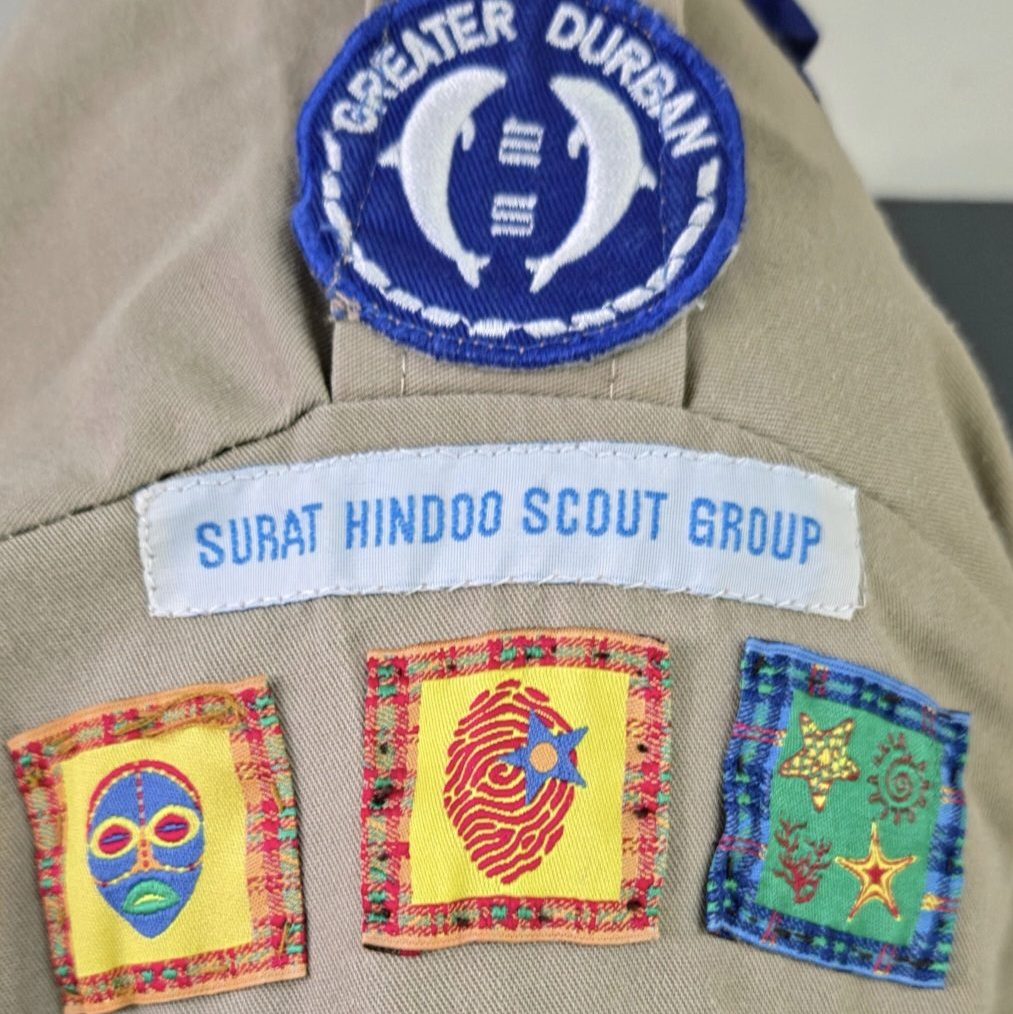
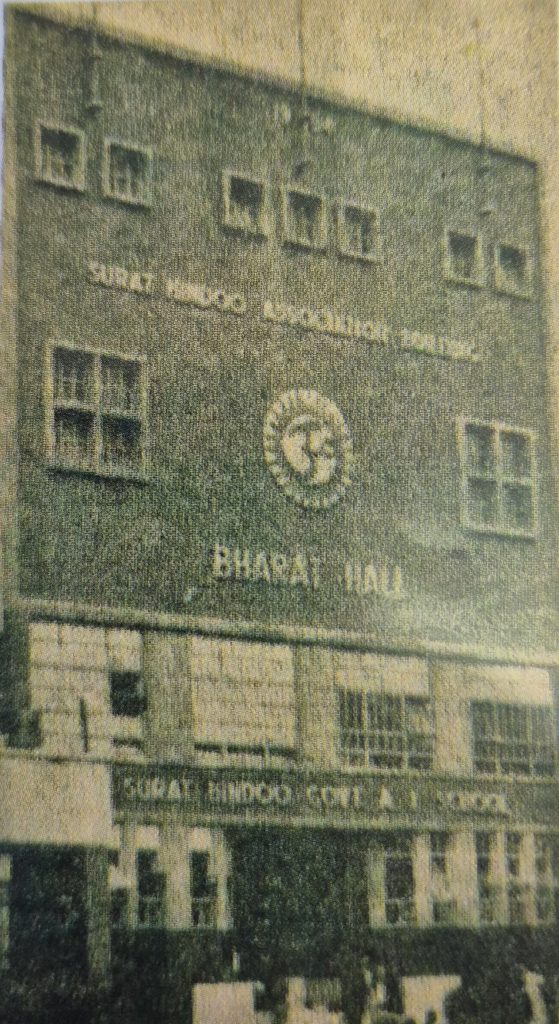
Thus in this scenario, Surat Hindoo Scout Group was established. Mr T. Thumbadoo, principal of the Surat Hindoo School, caught that vision and launched the Troop in 1954.
The early scout masters were teachers from the teaching staff namely :-
Srinivasan Nagwan, D G Naidoo, H Mahabeer, S M Pillay and H Moodley.
In 1978 the then 4 separate racial but equal scout associations in South Africa were combined into one unified body, the Boy Scouts of South Africa.
Surat Hindoo Scout Group has maintained a high standard of scouting over the years. The true spirit of scouting has contributed to our success. The Group Committee manned by young and old both male and female maintained a high standard of management. Their dedication and loyalty assisted the Group to reach national and international heights.
Some of the early notable activities:
1967 First Indian Troop to attend 2nd International Jamboree at Lourenco Marques (now Maputo)
• 1967 Surat Hindoo Scout Group earned to be the best organized Scout Troop. Naeem Khan the Troop Leader was selected to be a member of the South African Scout contingent to attend the 12th World Jamboree in USA
• 1970 Mr Naeem Khan became the First Springbok Scout after 42 years of Indian Scouting
• 1970 Troop toured Rhodesia (now Zimbabwe)
• 1971 The first Indian Chief Scout Award was presented to a Scout in our Troop Mr Naeem Khan was the recipient.
• 1971 Mr V K Naidoo was selected to attend the 13th World Jamboree hosted in Tokyo, Japan.
Since 1969, there has been 31 Springbok Awards attained by scouts of the Surat Hindoo Scout Group. The names of these Springbok Scouts are proudly displayed at our hall.